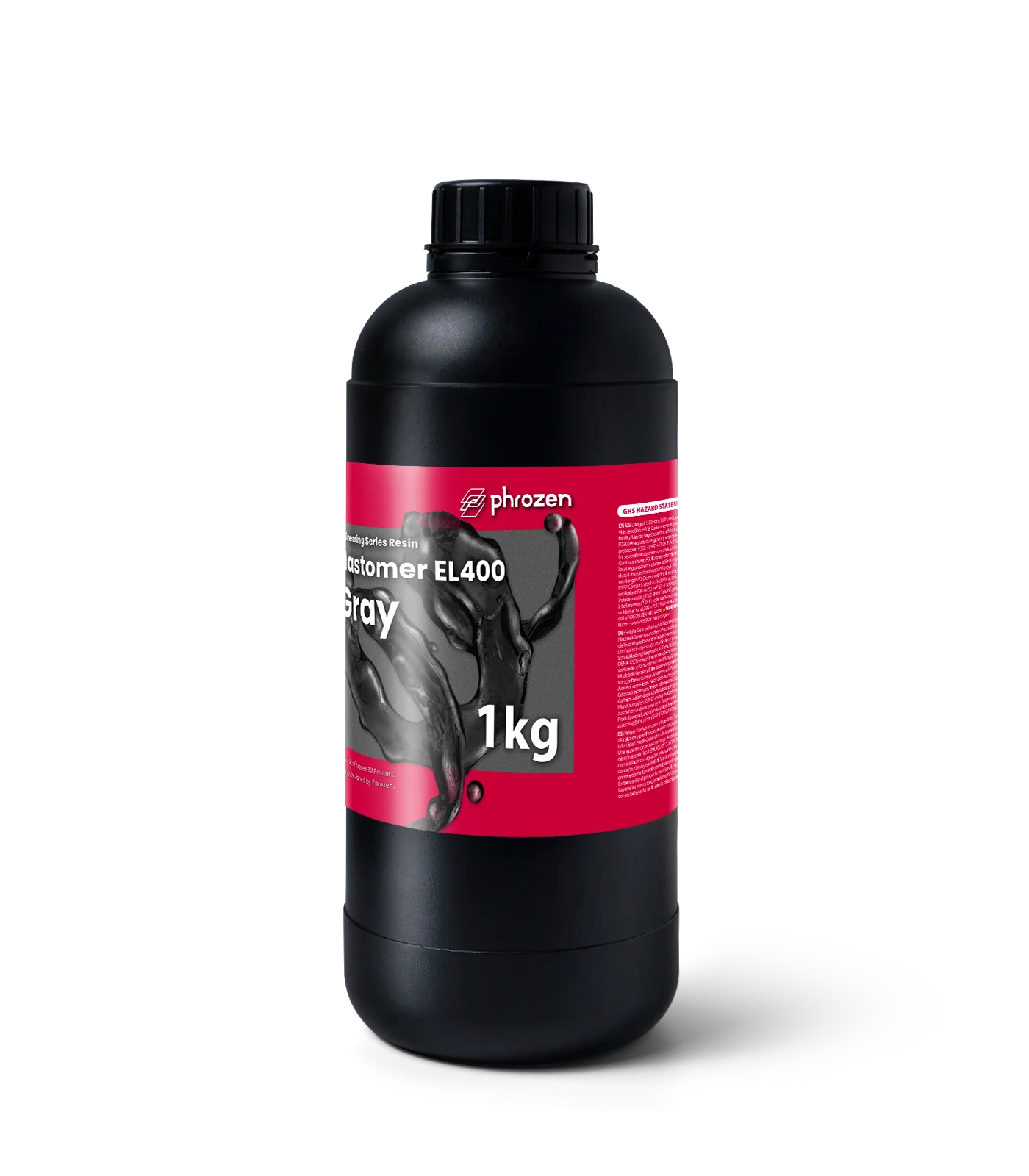
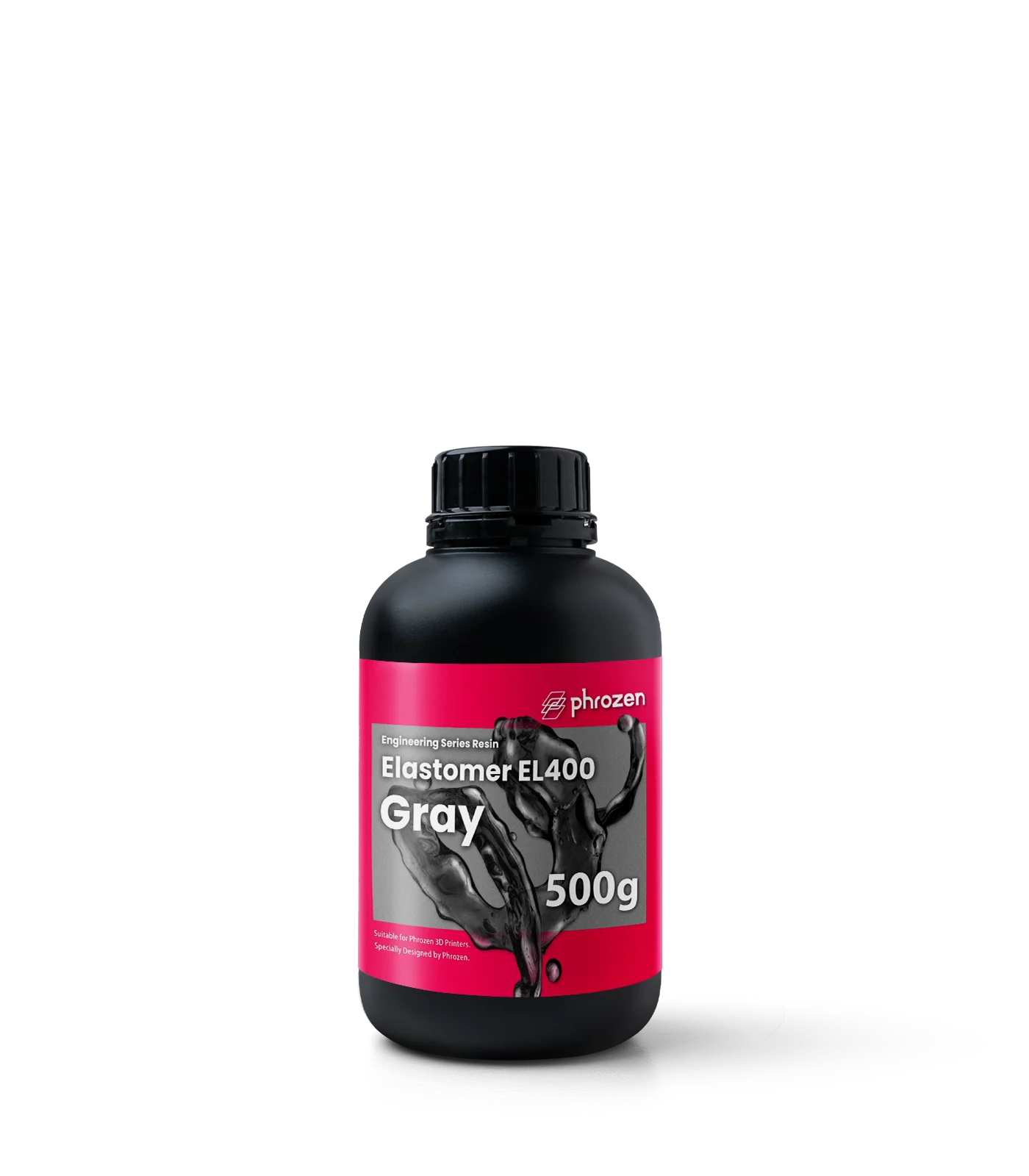
Phrozen Engineering Elastomer EL400 Resin
EL400 Resin: It’s Elastic, It’s 3x More Tear-Resistant
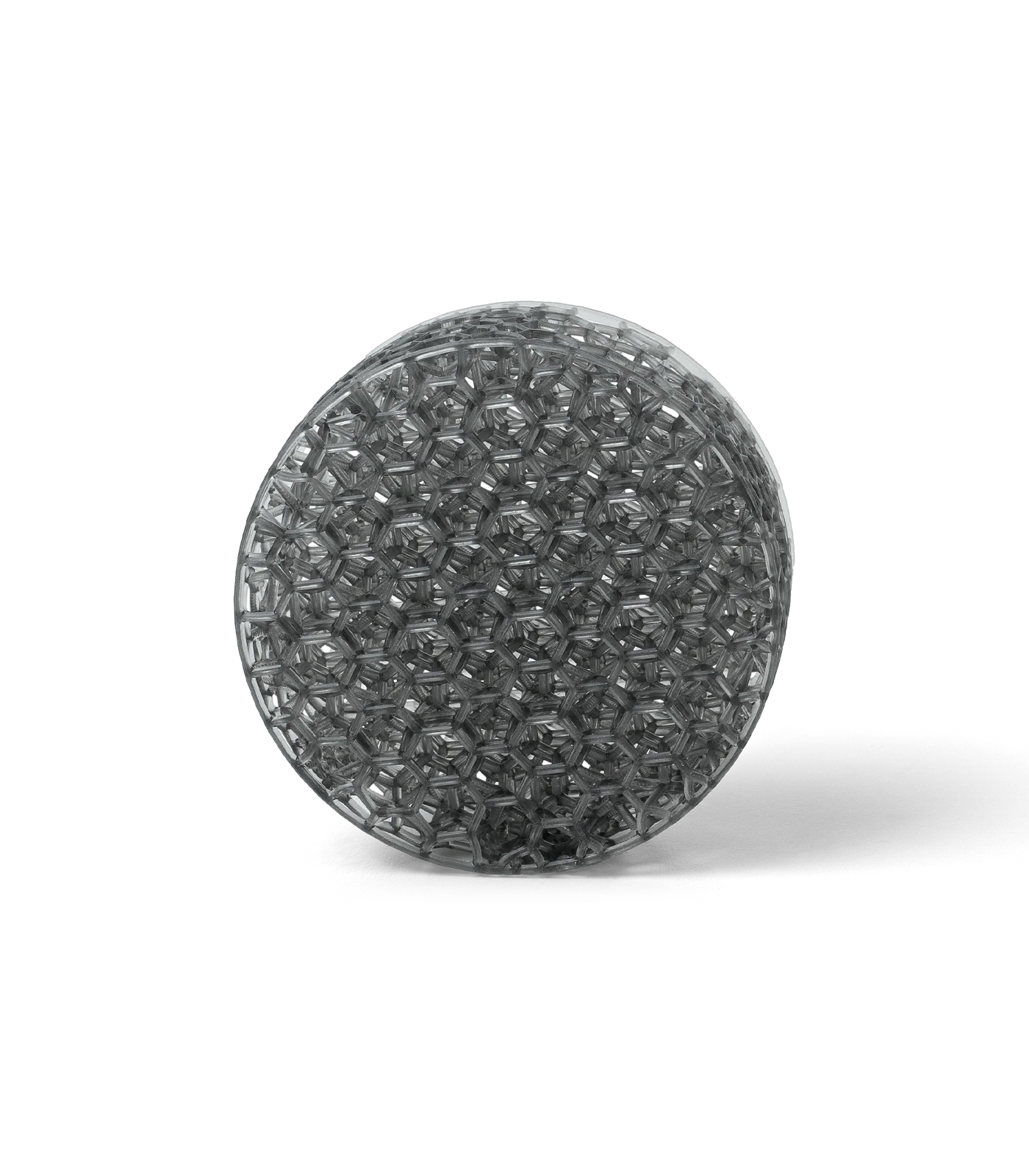
Creating prototypes with elastomer materials used to be tedious and time-consuming in traditional manufacturing methods. Phrozen EL400 Resin changes the game with its rubber-like, highly elastic, and tear-resistant elastomer properties, opening new possibilities for rapid iterative prototyping in 3D printing.
Benefits
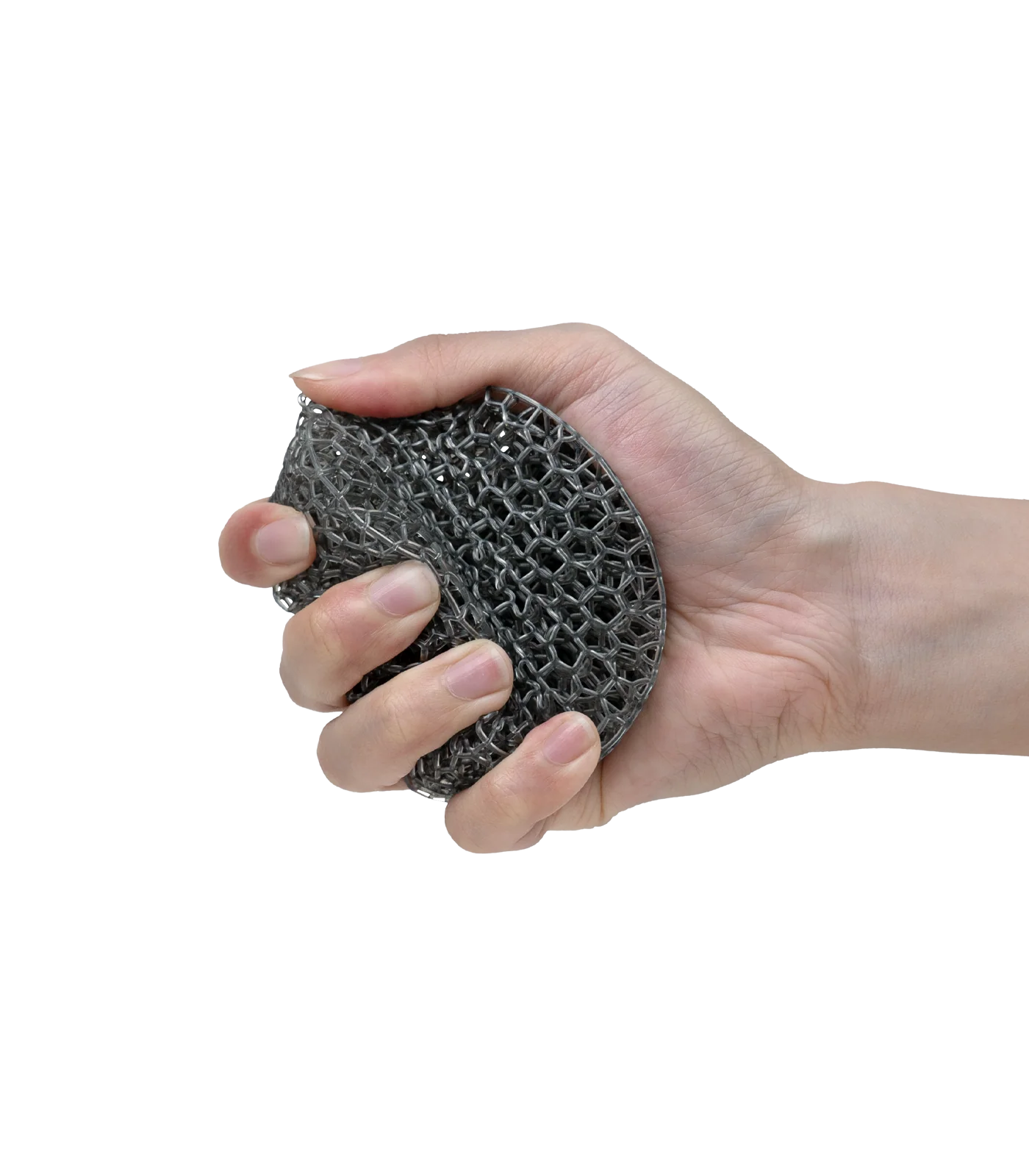
- Ultra-High Elasticity: With an ultra-high 391% elongation at break and a Shore hardness of 70–75A, EL400 combines rubber-like elasticity and hardness, offering excellent flexibility and stability to realize your innovative designs.
- Excellent Resilience and Reboundability: The EL400’s 40% Bayshore rebound rate makes returning to its original shape after deformation seamless. Ideal for durable prototypes for long-term testing and repeated use.
- Incredibly Tear-Resistant: In the Ross bending fatigue test at 23°C, models printed with EL400 exhibit superior reliability, withstanding over 60,000 cycles with a tear strength of 22 kN/m.
Printing Guideline
Printing Settings
|
Parameters |
Recommended Settings |
|
Layer thickness |
100 μm |
|
Wall thickness |
≥ 1.5 mm |
|
Lifting speed |
120 mm/min |
|
Support thickness |
1.0/1.2 mm |
|
Recommended printing position |
Flat on the build plate. |
*Note: Ensure that gaps between supports or within the model structure are not too narrow, as it may prevent the resin from curing properly in those areas.
Post-Processing
Remove Models > Cleaning and Drying > Post-Curing in Glycerin > Final Cleaning
Cleaning and Drying
Wash in 95% alcohol using Phrozen Wash for 45–60 seconds then place in a cool, ventilated area away from sunlight until it dries, or use the drying function in the Phrozen Curing Station. (Don’t soak for over 60 seconds to avoid surface damage)
Post-Curing
Soak in glycerin and post-cure for 60 mins. Soaking in glycerin helps improve the structural integrity of soft materials and reduces surface stickiness. Soaking for too long might cause deformation.
Final Cleaning
Rinse the model with clean water until it’s thoroughly cleaned and dry in a cool, ventilated area away from sunlight for 60 minutes or until the model dries completely.
Product Information
Product Information
Shipping & Returns
Shipping & Returns
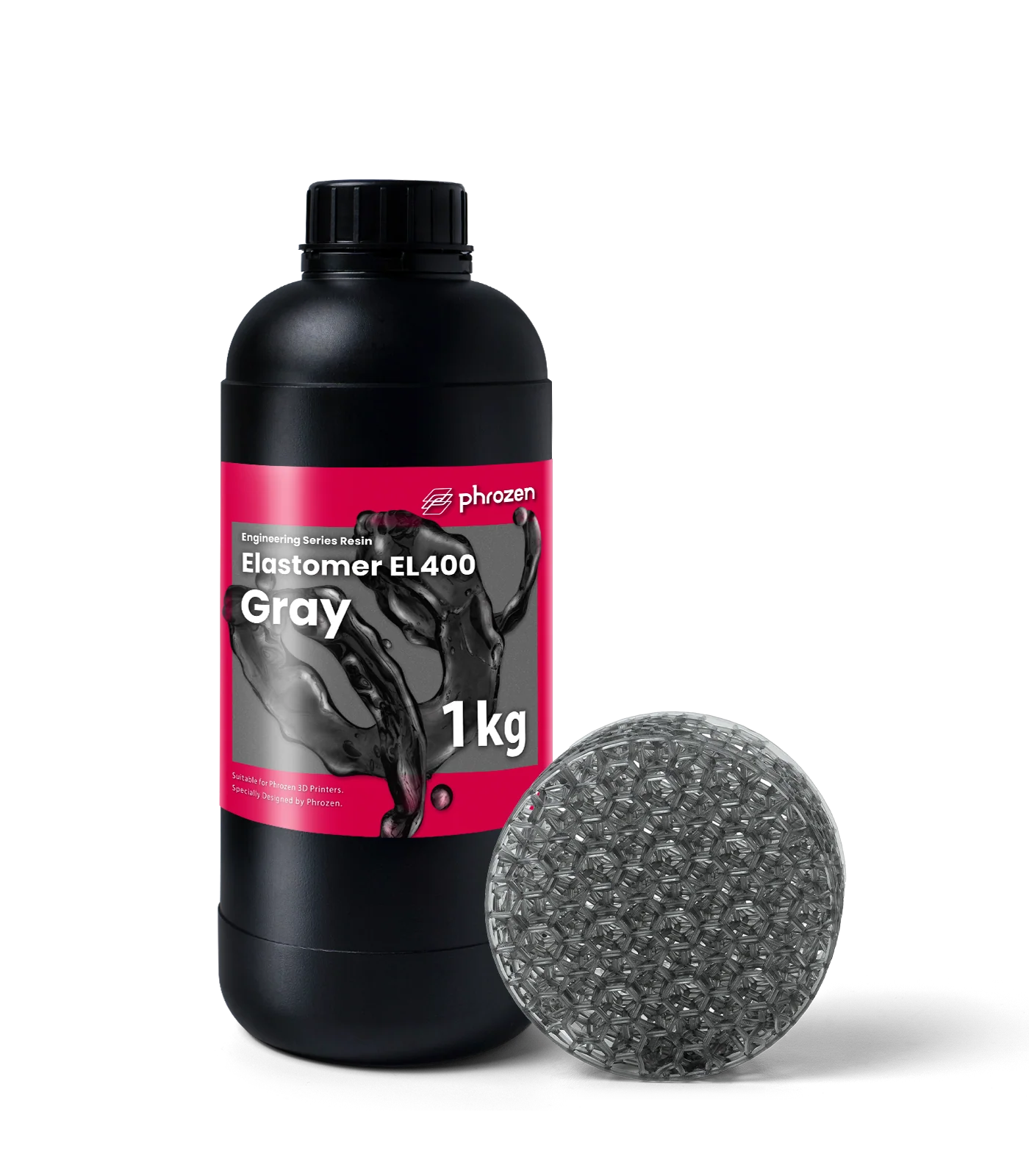
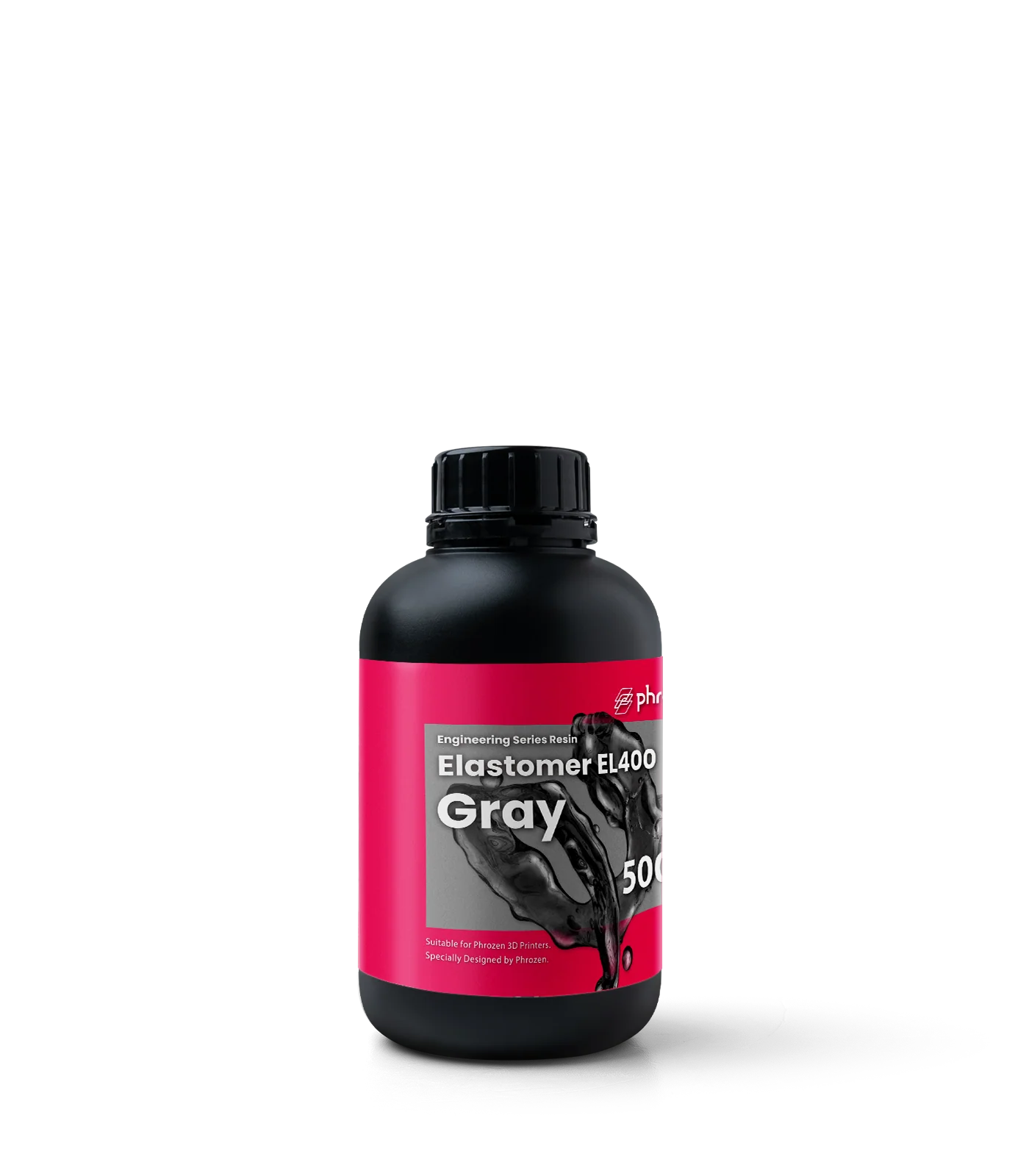
Phrozen Engineering Elastomer EL400 Resin
Phrozen Engineering Elastomer EL400 Resin
EL400 Resin: It’s Elastic, It’s 3x More Tear-Resistant
Creating prototypes with elastomer materials used to be tedious and time-consuming in traditional manufacturing methods. Phrozen EL400 Resin changes the game with its rubber-like, highly elastic, and tear-resistant elastomer properties, opening new possibilities for rapid iterative prototyping in 3D printing.
Benefits
- Ultra-High Elasticity: With an ultra-high 391% elongation at break and a Shore hardness of 70–75A, EL400 combines rubber-like elasticity and hardness, offering excellent flexibility and stability to realize your innovative designs.
- Excellent Resilience and Reboundability: The EL400’s 40% Bayshore rebound rate makes returning to its original shape after deformation seamless. Ideal for durable prototypes for long-term testing and repeated use.
- Incredibly Tear-Resistant: In the Ross bending fatigue test at 23°C, models printed with EL400 exhibit superior reliability, withstanding over 60,000 cycles with a tear strength of 22 kN/m.
Printing Guideline
Printing Settings
|
Parameters |
Recommended Settings |
|
Layer thickness |
100 μm |
|
Wall thickness |
≥ 1.5 mm |
|
Lifting speed |
120 mm/min |
|
Support thickness |
1.0/1.2 mm |
|
Recommended printing position |
Flat on the build plate. |
*Note: Ensure that gaps between supports or within the model structure are not too narrow, as it may prevent the resin from curing properly in those areas.
Post-Processing
Remove Models > Cleaning and Drying > Post-Curing in Glycerin > Final Cleaning
Cleaning and Drying
Wash in 95% alcohol using Phrozen Wash for 45–60 seconds then place in a cool, ventilated area away from sunlight until it dries, or use the drying function in the Phrozen Curing Station. (Don’t soak for over 60 seconds to avoid surface damage)
Post-Curing
Soak in glycerin and post-cure for 60 mins. Soaking in glycerin helps improve the structural integrity of soft materials and reduces surface stickiness. Soaking for too long might cause deformation.
Final Cleaning
Rinse the model with clean water until it’s thoroughly cleaned and dry in a cool, ventilated area away from sunlight for 60 minutes or until the model dries completely.
Product Information
Product Information
Shipping & Returns
Shipping & Returns
Description
EL400 Resin: It’s Elastic, It’s 3x More Tear-Resistant
Creating prototypes with elastomer materials used to be tedious and time-consuming in traditional manufacturing methods. Phrozen EL400 Resin changes the game with its rubber-like, highly elastic, and tear-resistant elastomer properties, opening new possibilities for rapid iterative prototyping in 3D printing.
Benefits
- Ultra-High Elasticity: With an ultra-high 391% elongation at break and a Shore hardness of 70–75A, EL400 combines rubber-like elasticity and hardness, offering excellent flexibility and stability to realize your innovative designs.
- Excellent Resilience and Reboundability: The EL400’s 40% Bayshore rebound rate makes returning to its original shape after deformation seamless. Ideal for durable prototypes for long-term testing and repeated use.
- Incredibly Tear-Resistant: In the Ross bending fatigue test at 23°C, models printed with EL400 exhibit superior reliability, withstanding over 60,000 cycles with a tear strength of 22 kN/m.
Printing Guideline
Printing Settings
|
Parameters |
Recommended Settings |
|
Layer thickness |
100 μm |
|
Wall thickness |
≥ 1.5 mm |
|
Lifting speed |
120 mm/min |
|
Support thickness |
1.0/1.2 mm |
|
Recommended printing position |
Flat on the build plate. |
*Note: Ensure that gaps between supports or within the model structure are not too narrow, as it may prevent the resin from curing properly in those areas.
Post-Processing
Remove Models > Cleaning and Drying > Post-Curing in Glycerin > Final Cleaning
Cleaning and Drying
Wash in 95% alcohol using Phrozen Wash for 45–60 seconds then place in a cool, ventilated area away from sunlight until it dries, or use the drying function in the Phrozen Curing Station. (Don’t soak for over 60 seconds to avoid surface damage)
Post-Curing
Soak in glycerin and post-cure for 60 mins. Soaking in glycerin helps improve the structural integrity of soft materials and reduces surface stickiness. Soaking for too long might cause deformation.
Final Cleaning
Rinse the model with clean water until it’s thoroughly cleaned and dry in a cool, ventilated area away from sunlight for 60 minutes or until the model dries completely.